


07 Dec The king, the laundress and the 200,000 prisoners
The secret history of Alfonso XIII
Did you know that a simple letter sent from France changed the fate of thousands of people during the First World War? Today, on our school blog, we travel back to Madrid in 1914 to discover a story of humanity that unites our two countries.
When we think of the First World War (1914–1918), we usually think of trenches, battles and generals. But amid the chaos, there was an unexpected hero who never fired a single shot: King Alfonso XIII of Spain.
As you know, Spain remained neutral during the conflict. While Europe was divided, Madrid became the only hope for thousands of French, German and Belgian families. But how did it all begin?
It all began with a French laundress
The story goes that at the end of 1914, a letter very different from the others arrived at the Royal Palace in Madrid. It had not been written by a president or an ambassador, but by a humble laundress from the Bordeaux region.
Her husband had disappeared during the Battle of Charleroi and the French government gave her no answers. Desperate, she decided to write to the only neutral king in Europe: ‘Your Majesty, I beg you, find my husband.’
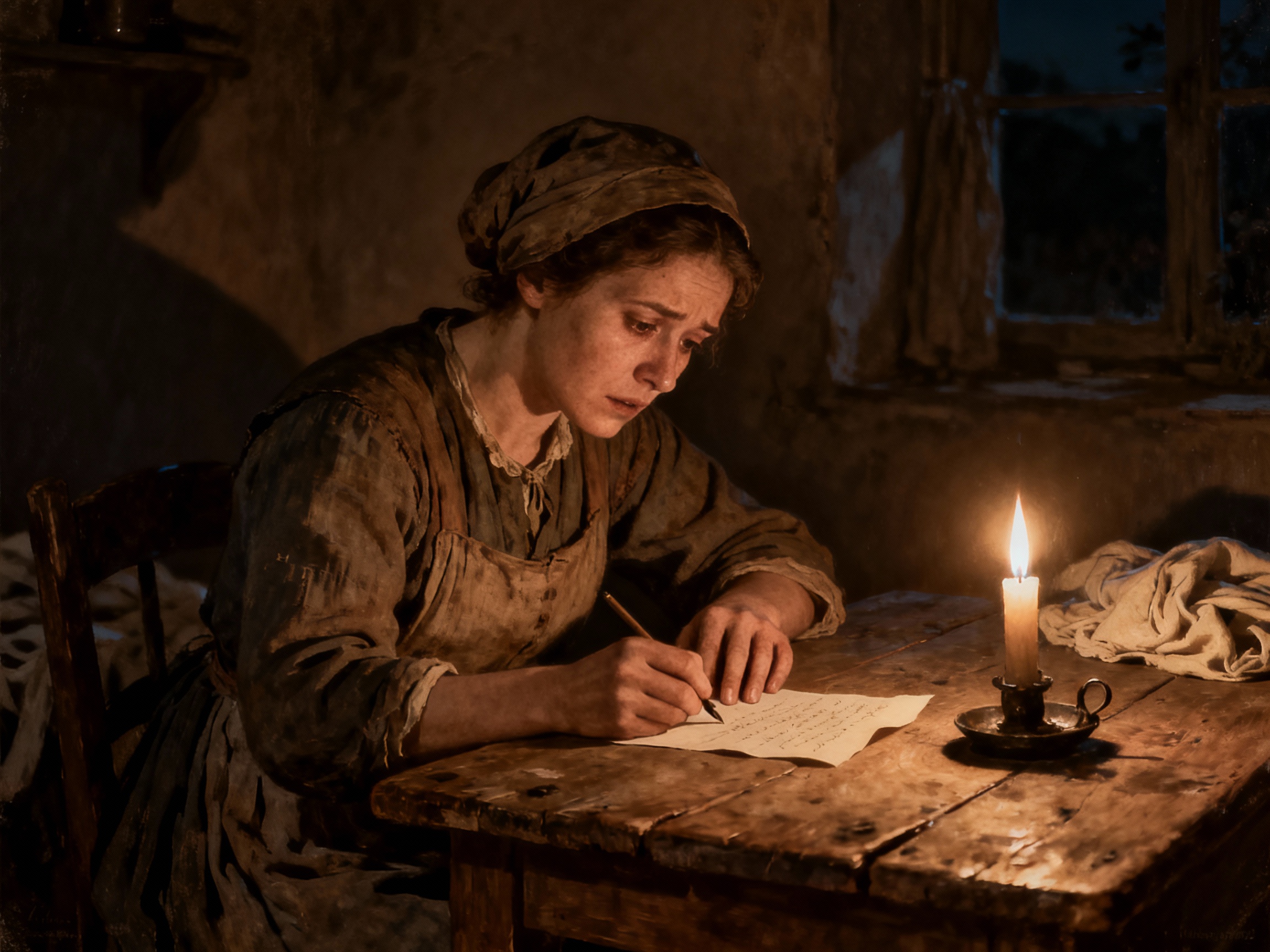
A simple letter changed the course of history: a French woman’s request gave rise to the largest humanitarian network of the time.
Alphonse XIII, moved, did not throw the letter in the bin. He called on his diplomatic contacts in Germany and, miraculously, found the soldier alive in a prison camp. When the newspaper La Petite Gironde published the news, something incredible happened: thousands of French people began writing to the king asking for his help in finding their loved ones.
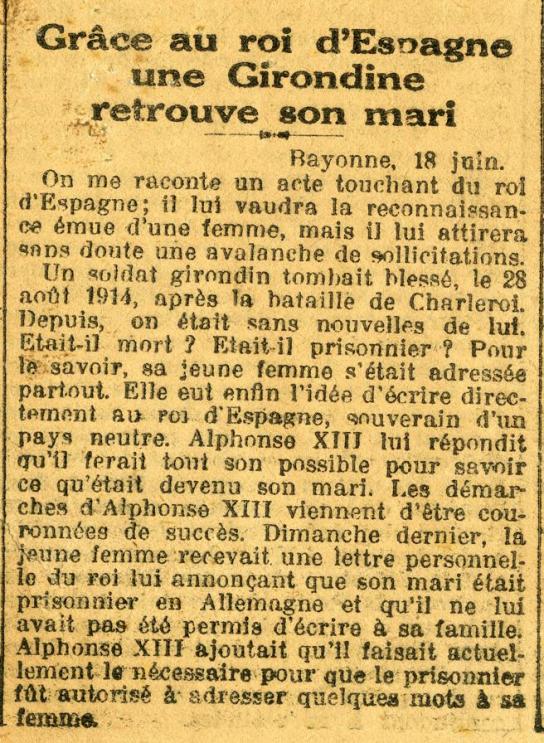
Exhibition ‘Letters to the King’. Article in ‘La Petite Gironde’ with thanks to the monarch. PATRIMONIO NACIONAL
The Oficina Pro Cautivos
What began as a personal favour turned into a huge humanitarian organisation. The king created the Prisoners’ Information Office (commonly known as Oficina Pro Cautivos ou European War Office). Unlike the Red Cross, which dealt collectively with large numbers of prisoners, the office of Alfonso XIII specialised in ‘case-by-case’ management, using royal diplomacy to locate missing persons, arrange repatriations and commute death sentences.
Faced with this avalanche, Alphonse XIII decided to formalise the operation. 24 October 1914 is considered the official opening date of the office. Initially, it was housed in a small office in the Private Secretariat. It quickly became too cramped and occupied three large rooms in the Plaza de Oriente wing, then finally premises on the upper floors and attics of the Royal Palace.
Imagine the scene: the elegant rooms of the palace filled with mountains of letters (they received thousands every day!). The king hired more than 40 people, including many female volunteers who spoke several languages, to sort the files of the missing by colour:
– Red: for the injured.
– White: for the deceased.
– Blue: for the missing.
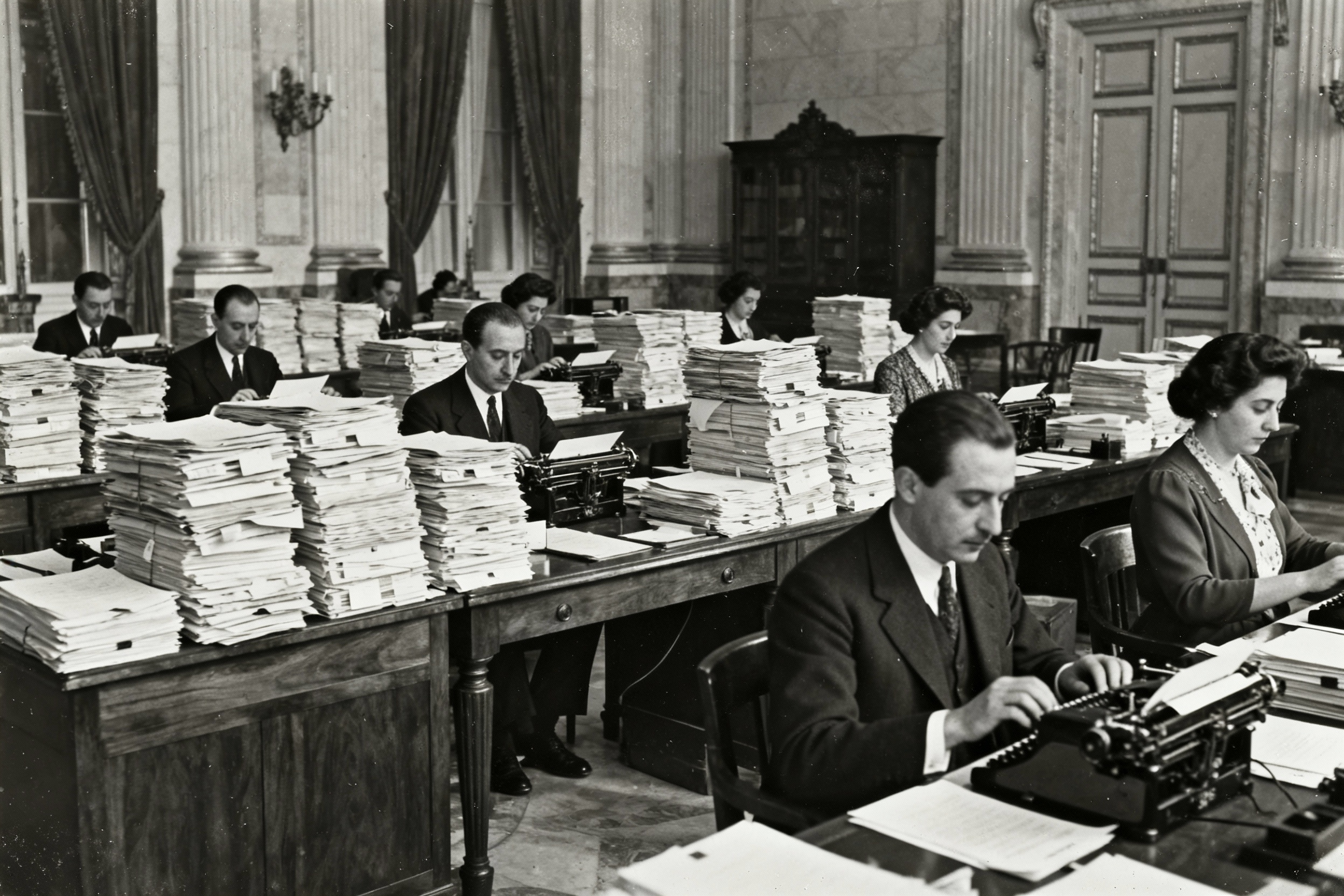
The Royal Palace in Madrid has been transformed into a bureaucratic office responsible for managing over 200,000 files.
The most surprising thing is that the Spanish state did not pay anything. The king financed everything out of his own pocket, spending a fortune on stamps, paper and telegrams.
Living in Strasbourg, a city that knows well the scars of European history, this work takes on special significance. The office of Alfonso XIII made no distinction between the camps. It helped French and German soldiers alike. Thanks to this office:
1. 70,000 civilians were rescued from occupied areas.
2. The repatriation of 21,000 sick prisoners was organised.
3. Dozens of death sentences were avoided.
Key structure and individuals
If the king was the heart, Emilio María de Torres y González-Arnao was the brain. As the king’s private secretary, Torres was responsible for the operational management of the office. He designed the colour-coded filing system, as mentioned above, to classify the missing persons by nationality, battalion and internment camp. He worked tirelessly to classify requests and draft diplomatic letters. For this titanic task, the king later awarded him the title of 1st Marquis of Torres de Mendoza.
In addition, Luis de Silva y Carvajal, a diplomat and aristocrat, was his right-hand man. He was responsible for coordinating the international network, acting as a liaison between Madrid and the embassies in Berlin, Vienna, Paris and London.
The office started with seven people, but by 1915 it already had more than 40 employees.
– Five additional women and sixteen additional men were hired in July 1915 to type and file documents, breaking with the male tradition of the royal secretariat.
– Many ladies from Madrid’s high society (known in other contexts as ‘Margaritas’ or Red Cross volunteers, although here they were acting under royal mandate) helped translate the thousands of letters that arrived in French, German, English and Italian.
However, the office could not have functioned without the king’s “eyes” on the ground:
– Alfonso Merry del Val (London): He handled British requests.
– Luis Polo de Bernabé (Berlin): He played a crucial role. As ambassador of a neutral country respected by Emperor Wilhelm II, he had privileged access to lists of German prisoners, which the Red Cross was sometimes unable to obtain.
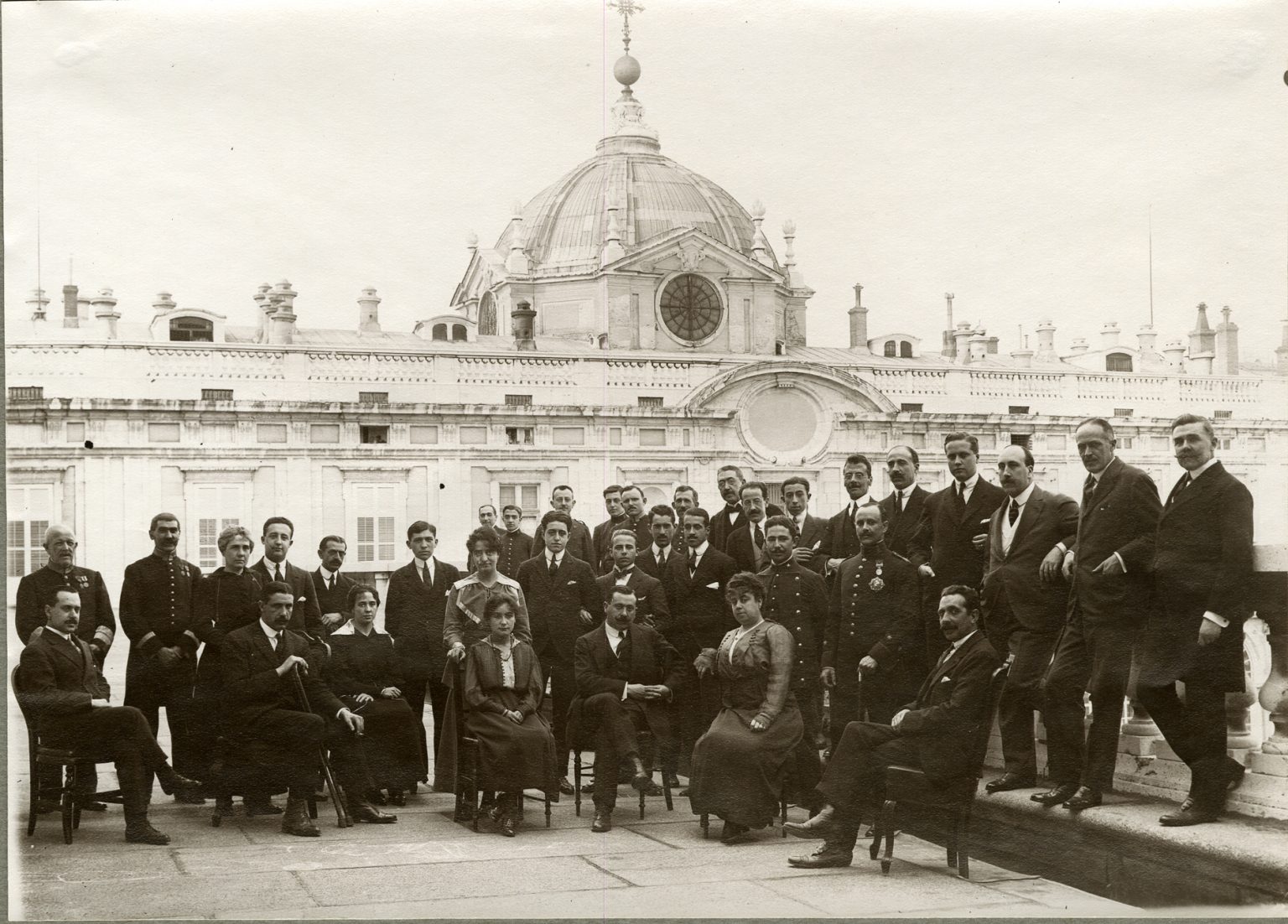
Staff of the Royal Palace Office. 1917.
But what makes this story unique is not only the numbers (more than 200,000 cases processed), but also the names themselves. The office made no distinction between a simple soldier and a celebrity; for the king and his secretary, Emilio María de Torres, all these lives were worth saving.
Do you know Maurice Chevalier? Before becoming the Hollywood star who sang in ‘Gigi’, Chevalier was a French soldier wounded and captured by the Germans in 1914. He was interned in the Altengrabow prison camp, where he learned English from other captives. Thanks to the direct intervention of Alphonse XIII with Kaiser Wilhelm II, Chevalier was released in 1916, allowing him to resume a career that would make him immortal.
Among these celebrities, two other names are also worth mentioning:
– Vaslav Nijinsky: The ‘God of Dance’, a major star of the Ballets Russes, was arrested in Hungary at the start of the war because of his Russian nationality (an enemy of the Austro-Hungarian Empire). He was placed under house arrest in Budapest, where he lived in agonising uncertainty. After complex diplomatic negotiations orchestrated from Madrid, the king secured his release, allowing Nijinsky to travel to New York and then to Spain, where the company found refuge.
– Arturo Rubinstein: Although he was not a prisoner, the talented Polish pianist found himself caught up in the conflict. Thanks to a Spanish passport obtained by order of the king, he was able to travel freely and develop his international career, while retaining a deep gratitude towards Spain.
However, the office also experienced moments of profound sadness. The case that most tormented the king was that of Edith Cavell, the famous British nurse sentenced to death by the Germans in Belgium for helping Allied soldiers escape. Alfonso XIII sent urgent telegrams and mobilised all neutral diplomatic channels to ask for clemency, but his pleas arrived too late. Her execution had a profound effect on the monarch.
The legacy: “El Archivo de las Lágrimas”
The work of the Oficina Pro Cautivos is an often forgotten but essential chapter in history. It demonstrated that even in the darkest of times, diplomacy and humanity can save lives, whether those lives belong to humble laundresses or Russian ballet stars.
Today, the Royal Palace preserves thousands of these cards and letters in the palace’s general archives, a unique documentary record (often referred to as “the archives of tears”) that traces the human suffering of the Great War.
Alphonse XIII was nominated for the Nobel Peace Prize, and although he did not win it, he was long remembered in France and Belgium as ‘the true knight of charity’.
No Comments