


17 Dec The magic of the Christmas lottery
Have you ever wondered where the typically Spanish tradition of the Christmas lottery comes from? Or why the children of San Ildefonso sing the numbers with such a distinctive intonation? At ELE USAL Strasbourg, we believe that understanding these cultural traditions is essential to truly understanding Spain. That’s why today we want to take you on a journey through more than two centuries of history, hope and solidarity.
The distant origins: Charles III’s primitive lottery
To understand the true history of the Christmas lottery, we must go back more than 200 years, to the reign of Charles III (1759-1788), an enlightened king who imported revolutionary ideas from his previous experience as King of Naples.
In 1763, the Marquess of Esquilache, the king’s Minister of Finance, presented an innovative idea for the time: to create a state lottery that would raise funds for the public coffers without increasing taxes on an already heavily taxed population. The official objective was noble: the profits were to be used ‘for the benefit of hospitals, hospices and other charitable works’.
On 10 December 1763, the first draw of this “number lottery” or “royal lottery”, as it was then called, took place in San Ildefonso Square in Madrid. The system was completely different from today’s: there were 90 numbers in a bag, and a blindfolded child drew 5 balls. Players could bet on specific numbers, 1, 2 or more numbers of their choice.
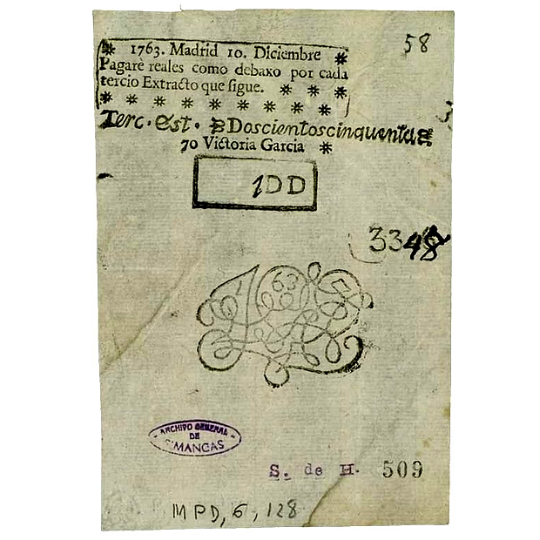
Image of a Primitiva lottery ticket from 1763.
This system would later become known as the “Lotería Primitiva” (primitive lottery), a name it acquired after 1812 to differentiate it from the new format that was about to be introduced. Although the game was an immediate success in Madrid, over the years it became a popular form of gambling throughout Spain.
A heroic birth: Cadiz, 1812
However, the lottery as we know it today, the one you love or that is at least part of the Spanish Christmas landscape, was born in completely different circumstances. Imagine Spain in 1811. The country is under French occupation, Napoleon’s troops control much of the territory, and the economy is devastated by the War of Independence.
In this desperate situation, the Cortes of Cadiz — which represented Spanish legitimacy while the nation resisted heroically — faced a serious problem: the treasury was empty and they urgently needed money. It was then that a Sevillian named Ciriaco González Carvajal, Minister of the Council and Chamber of the Indies, presented a proposal inspired by a lottery that had been operating successfully in New Spain (now Mexico) since 1771.
The idea was revolutionary: instead of using numbers in a bag as in the Primitiva lottery, why not create tickets with printed numbers, as was done in Mexico? This would make it possible to sell fractions (tenths) of tickets, thus democratising access to anyone with 40 reais in their pocket.
The Cortes of Cadiz unanimously approved the proposal on 23 November 1811. The new lottery was named “Lotería Moderna” (modern lottery) to clearly differentiate it from the old “Lotería Primitiva” (primitive lottery). Ciriaco González Carvajal justified this initiative as ‘a means of increasing revenue for the Treasury without harming taxpayers’.
On 4 March 1812, while Cadiz was in the midst of resistance, almost besieged by the French, the first draw of the Lotería Moderna took place. But the one that will go down in history is the one that took place on 18 December 1812, a few months after the proclamation of the 1812 Constitution (the famous “Pepa”). In this first Christmas draw, the winning number was 03 604, which was rewarded with 8,000 pesos duros (a sum considered immense at the time). A tenth of a ticket cost only 40 réaux. It is important to note that at the time, it was not known by this name, but due to the proximity of the Christmas holidays, it ended up being called that, even though it was not officially named ‘Sorteo de Navidad’ (Christmas draw) until 1892.
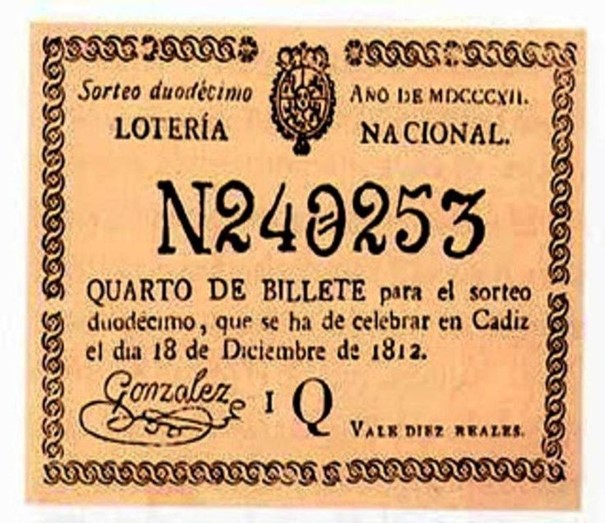
The most extraordinary thing? The Christmas lottery has never been suspended in 213 years. Not during the Carlist Wars, not during the Civil War, not even during the pandemic. It is Spain’s most enduring tradition.
The victory of the modern lottery over the Primitiva
What happened next is fascinating from a historical perspective. The new modern lottery was a resounding success compared to the old primitive lottery. The sales figures clearly demonstrate this: between 1815 and 1817, the modern lottery doubled the revenue of the primitive lottery, and more than doubled it in the following two years.
The Spanish public found something in the Lotería Moderna that the Primitiva did not offer: suspense and excitement. The drawing of the numbered balls, the sound of the balls falling, the anticipation of the winning number… all this created a tension that the old lottery with numbers in bags could not match. What’s more, the possibility of splitting the ticket into tenths allowed more people to participate, encouraging the Spanish tradition of “sharing tenths” with friends and family.
Meanwhile, the old primitive lottery was dying out. After nearly a century of existence less glorious than that of its modern sister, it was abolished in 1862. It took more than a century for it to resurface: the Lotería Primitiva was relaunched in 1985 in a new format (the 6/49 format we know today), becoming one of the most popular lotteries today.
Why is the top prize in the Christmas lottery called “el Gordo” (the fat one)?
Here is one of the most charming anecdotes in the history of the Christmas lottery. Although it seems incredible, the name “El Gordo” has nothing to do with the millions distributed each year. Its origin is much more picturesque and dates back to the 18th century, when the lottery promoters had a brilliant idea: to create an advertising character to promote the draw.
The character was known as ‘The Lucky Dwarf’ or ‘The Lottery Fanatic’. He had a very distinctive appearance: small in stature, but with a stocky, chubby body. Indeed, the typical white balls that come out of the drum each year are reminiscent of the character’s round silhouette, covered entirely in numbers from head to toe. The Lucky Dwarf appeared in numerous books, prints and drawings of the time.
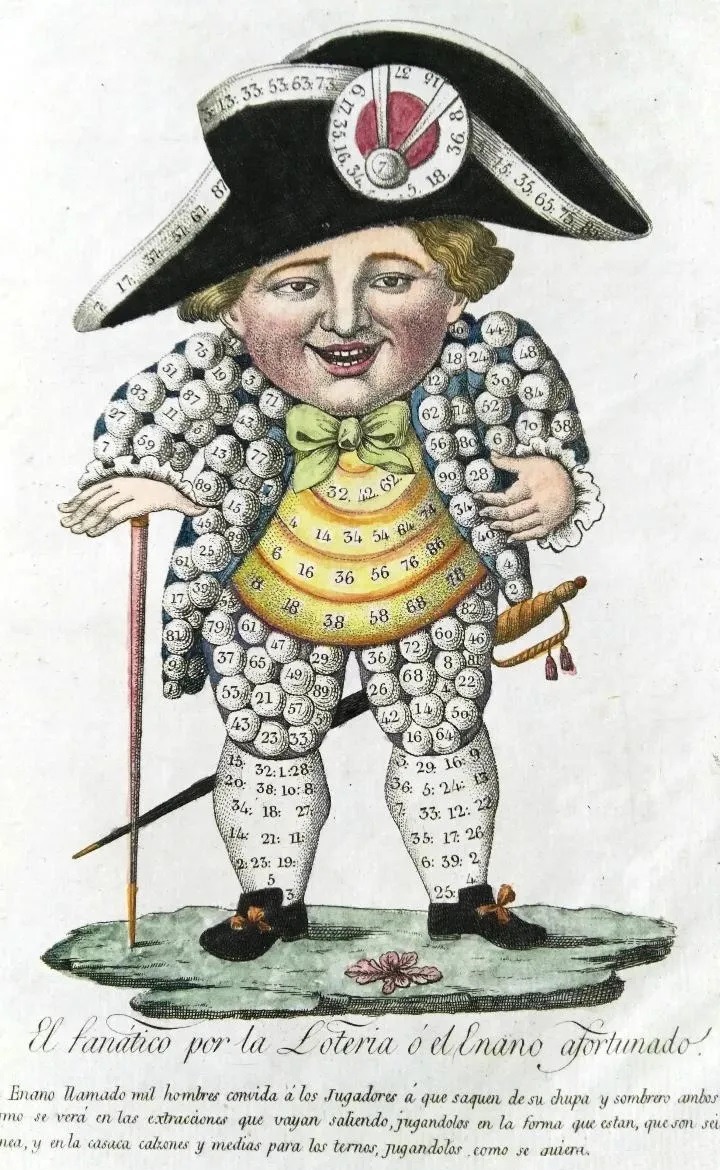
One of the most famous inscriptions next to the figure read: ‘Of joy and money, this lucky dwarf, if you study him carefully, will gladly teach you the path to fortune.’ The figure carried the now legendary lottery balls with a multitude of numbers, creating an almost magical and mythological image.
The Lucky Dwarf was extremely well received by the population. With his various slogans and demands, this quasi-mythological character greatly contributed to the spread of the lottery and encouraged people to try their luck. According to historians, it was this corpulent character who gave rise to the name ‘El Gordo de la Lotería’ (the fat man of the lottery) given to the first prize in the draw. People began to call him this informally, and the nickname caught on, becoming established for more than two centuries.
Years later, the character even lent his name to a newspaper called El Enano. With time and the arrival of new advertising strategies, the character lost some of his visual popularity: he no longer appears on television or on lottery administration billboards. But his legacy is infinitely more important than his media presence. No one can imagine the lottery draw without his influence, because for decades, his name — his beloved ‘Gordo’ — has given its identity to the most coveted prize in the country.
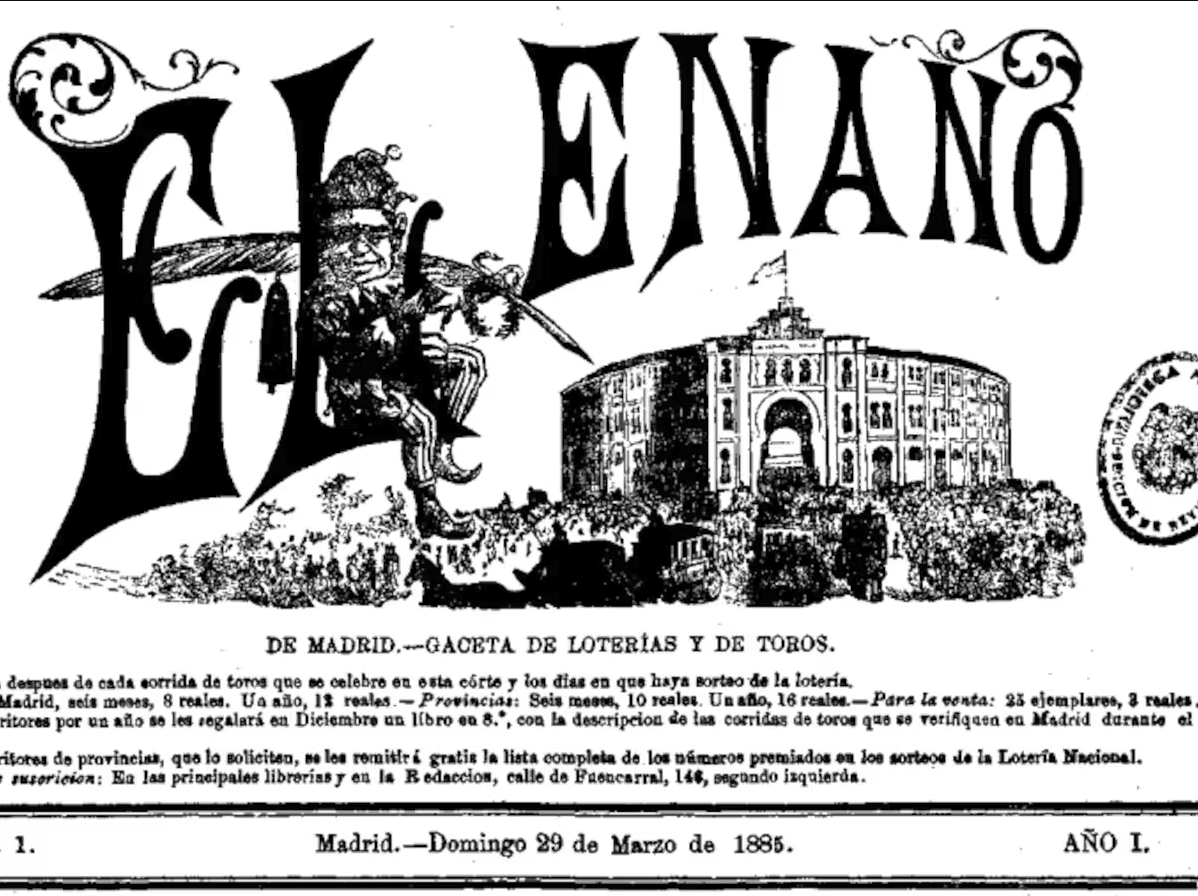
Cover of the newspaper El Enano. / National Library of Spain
Civil war and divided lottery: a unique case in history
Here is a story that seems straight out of a Javier Marías novel. During the Spanish Civil War (1936–1939), the nation was literally divided. But the Christmas lottery was not interrupted. On the contrary, a unique event in its history occurred: in 1938, there were two jackpots simultaneously.
The Republican camp held its draw in Barcelona on 22 December, where the number 22,655 was drawn. The Nationalist camp held its draw in Burgos, with the number 36,758. It was as if the lottery reflected the division of the nation: two Spains, two Gordos.
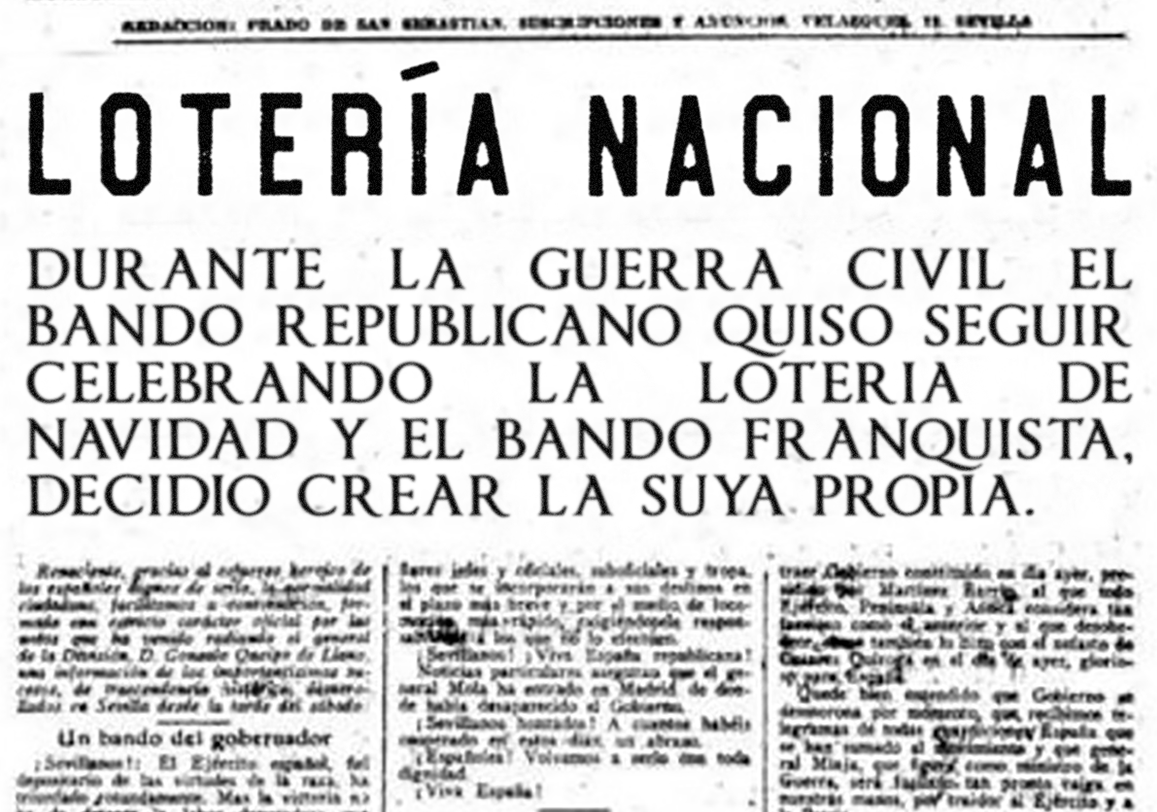
During the civil war, the Republican side wanted to continue celebrating the Christmas lottery, while Franco’s side decided to create its own.
When the war ended in 1939, the lottery returned to Madrid, and since then it has been unique and indivisible. But this episode in 1938 remains in the historical archives as a testimony to what happened during those terrible years.
An evolving tradition: from Cádiz to Madrid, from drums to television
Although the lottery was established in 1812, the regular annual celebration did not begin until 1839. And the official name of ‘Sorteo de Navidad’ (Christmas draw) was not adopted until 1892, 80 years after its creation.
One of the most significant changes occurred in 1913: the introduction of the current system of wooden spheres and balls that you can see today at the Royal Theatre. These decorative drums, with their white balls engraved with numbers, have become the visual symbols of the tradition. They are wooden time machines, almost relics that have remained unchanged for over 110 years.
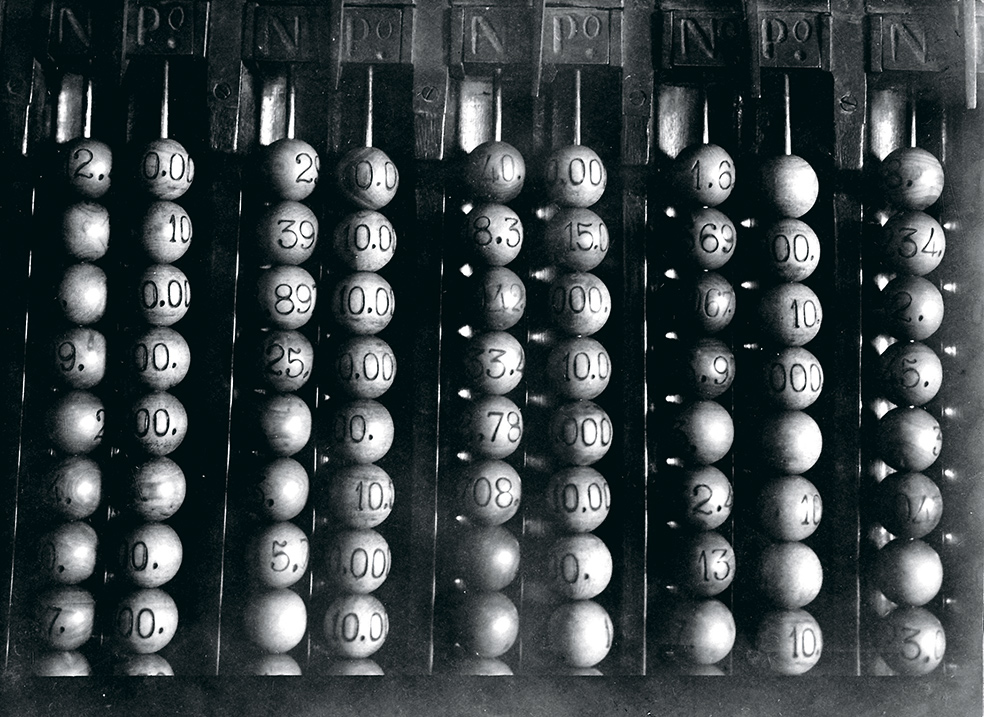
In 1913, wooden balls made of boxwood, on which numbers and letters were engraved with a hot iron, were introduced.
But the most spectacular change came with television. On 22 December 1957, barely a year after the birth of Spanish public television, TVE broadcast the draw for the first time. Overnight, millions of Spaniards who previously had to wait for the next day’s news were able to watch it live. This marked the birth of one of the most important televised ceremonies of the year in Spain.
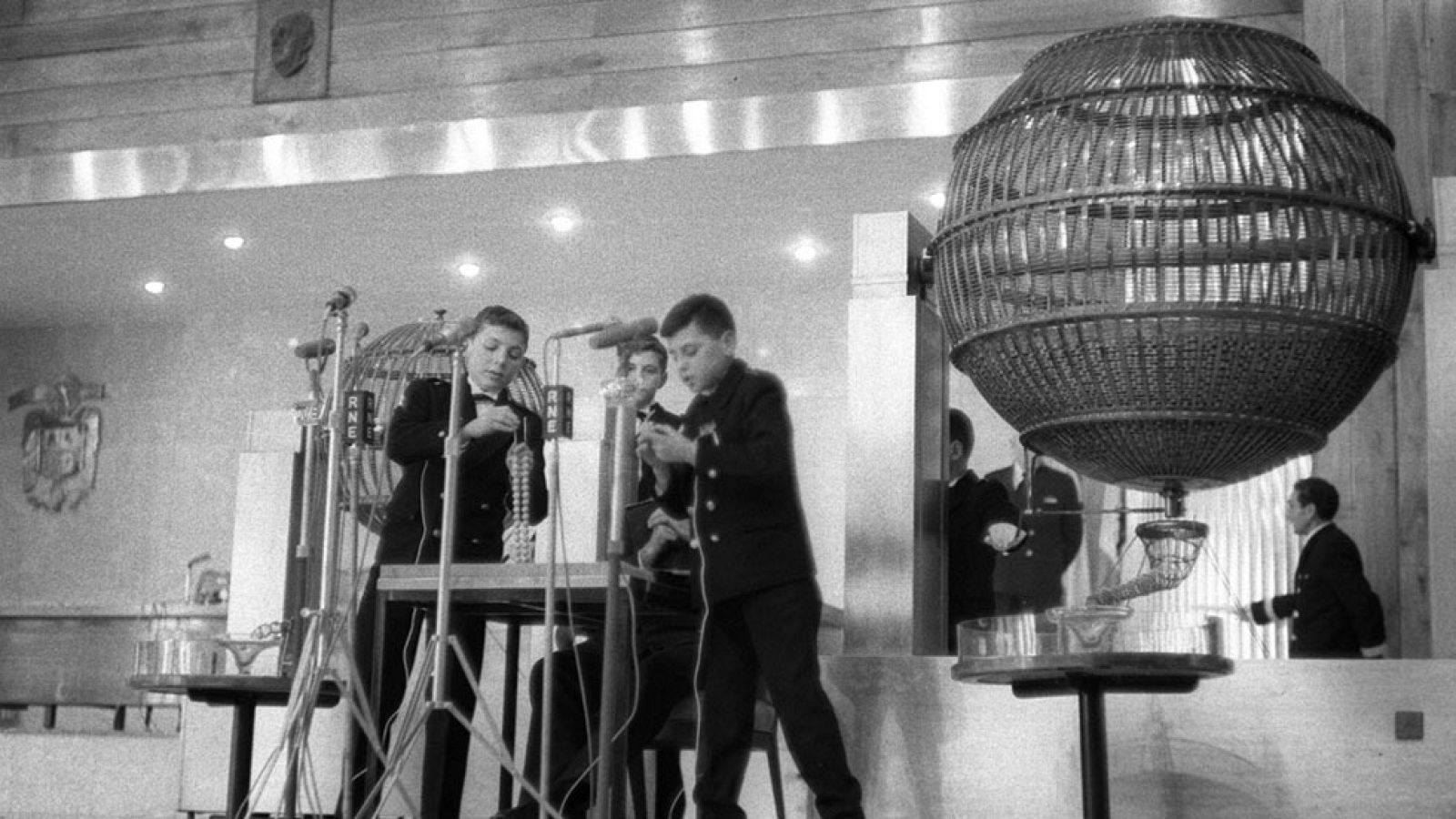
The Christmas lottery on television
Today, more than six decades later, the lottery draw remains one of the most watched television events in Spain. It is broadcast at around 9:15 a.m. on 22 December, and practically the whole of Spain stops to watch it.
The children of San Ildefonso: magical voices of hope
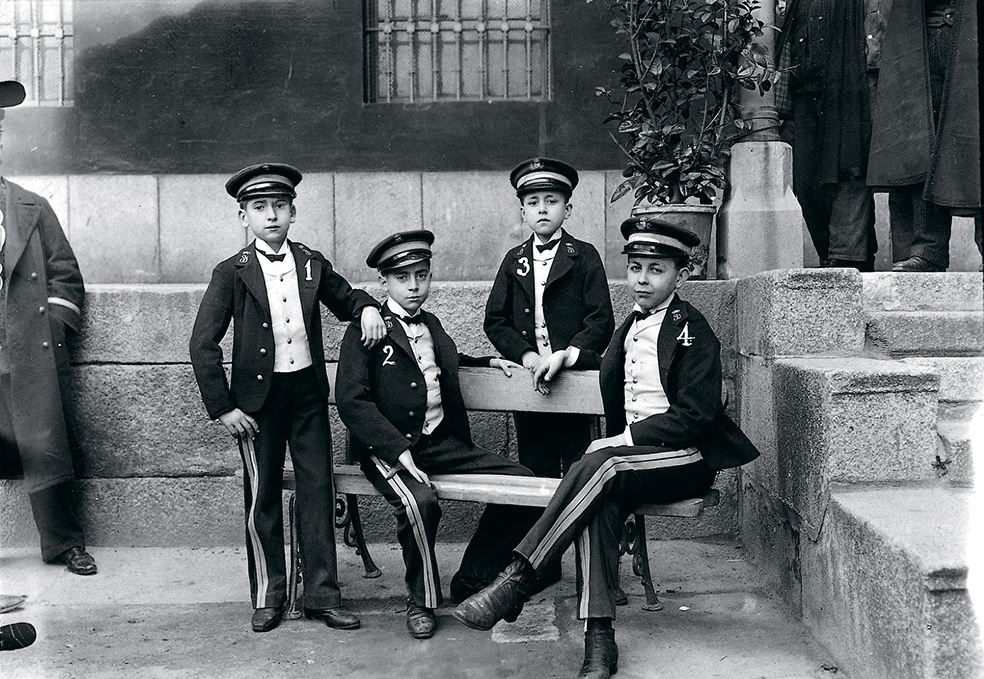
The children of San Ildefonso have been singing the lottery numbers — but not the Christmas jackpot — since 1771.
If there is one thing that makes the Christmas lottery recognisable throughout Spain, it is the voices of children singing the numbers with an almost musical intonation: ‘Miiiiiil eeeeuuuuroooooos’ resonates like a Christmas mantra every 22 December.
These young singers belong to the Colegio de San Ildefonso, a Madrid institution founded in the 15th century to take in orphaned and abandoned children. What is fascinating is that these children had been singing at the draws since 1771, even before the Christmas lottery existed. They sang in the streets in exchange for alms to finance the school.
When the Christmas lottery was created in 1812, it was natural to include these children in the draw. They were paid, enjoyed financial stability and brought a human and touching touch to a process that, without them, would have been purely mechanical.
But here’s what’s interesting: for 90 years (until 1981), only boys’ voices were included in the lottery. It was in 1981 that the school admitted its first girls, and since 1984, they have been officially included in the lottery. Today, girls are in the majority: of the 32 or so participants, most are girls.
These children who sing the Gordo are part of a tradition that touches nearly 50 million people. For most Spaniards, the voice of a child from San Ildefonso is synonymous with Christmas. It’s pure magic.
Numbers that repeat luck: when probabilities defy logic
Here is a piece of information that will fascinate all probability enthusiasts. In over 200 years of history, only two numbers have been drawn twice for the jackpot.
The number 15,640 won in 1956 and again in 1978—22 years later. The number 20,297 won in 1903 and again in 2006—103 years later. With 100,000 possible combinations, the probability of this happening is extraordinary. Some would even say it’s almost miraculous.
There are also some curious trends. The ending 85 has appeared seven times as Gordo, while 57 has appeared six times. In Madrid, the combination 515 has appeared three times (1897, 1899 and 1982).
The psychological phenomenon: when illusion is contagious
Did you know that the Christmas lottery generates “artificial optimism” throughout the region where the prizes are won? Scientists at Carlos III University have proven that this effect is real and measurable.
What is curious is that you don’t have to win to feel hopeful. If you live in a town where the jackpot has been won, even if it’s just in a lottery office, your mood improves. This is an effect of “emotional contagion” that shows how much other people’s luck affects us.
But that’s not all: the tradition of sharing tickets makes the Christmas lottery unique. At the office, with family, in your neighbourhood, everyone buys tickets together. If someone wins, everyone celebrates. If no one wins, everyone consoles each other. It’s a collective experience, not an individual one.
Legendary administrations: temples of luck
Do you believe in magical places? The Spanish do. Certain places have gained a reputation for bringing extraordinary luck.
« Doña Manolita » in Madrid is probably the most famous lottery in all of Spain. It has distributed countless jackpots over the decades and has become a practically sacred institution.

Des gens achetant des billets de loterie de Noël à l’agence Doña Manolita, à Madrid.
But if you want to visit the most legendary place, you have to go to Sort, in the province of Lleida. The name of the village literally means ‘luck’ in Catalan. This is where you’ll find « La Bruixa d’Or » (the Golden Witch), a lottery office that has distributed around €3 billion in winnings since it opened in 1986. Every December, thousands of pilgrims flock to Sort in search of a little bit of magic.
The prices: from 40 reais to 20 euros
The Christmas lottery also reflects Spain’s economic development.
A tenth cost 40 réaux in 1812, which was the smallest possible investment. In 2025, it costs 20 euros. But the value of the initial price has undergone a spectacular change:
– 1812: 8,000 pesos (first prize)
– 1850: 4,000 pesetas
– 1965: 370,000 pesetas
– 1967: 750,000 pesetas
– 2025: €4 million per series (or €400,000 per tenth)
In 2025, the sale of 198 million tickets generated total revenue of €3.96 billion. 70% went towards prizes, while the remaining 30% financed management costs and generated revenue for the State.
Why the Christmas lottery is more than just a lottery
When you think about it, the Christmas lottery is not just a fundraising mechanism or a game of chance. It is a ritual that defines Spanish identity. It is a time when millions of people gather around a television set to share their hopes.
It was born in a period of crisis and war, survived intact the civil wars that divided the nation, adapted to new technologies and became a cultural element that transcends social classes, regions and generations.
For those of us who study and teach Spanish in Strasbourg, the Christmas lottery reminds us that Spain is a country of deep traditions, solidarity (because luck is shared) and hope. After all, what is Christmas if not a time to let hope shine through?
No Comments