


18 Jan The Prix européen du roman d’amour : celebrating European romantic literature
«Je ne te verrai pas mourir» has been selected by ELE USAL Strasbourg as the Spanish candidate for the fourth edition of the Prix européen du roman d’amour (2026-2027).
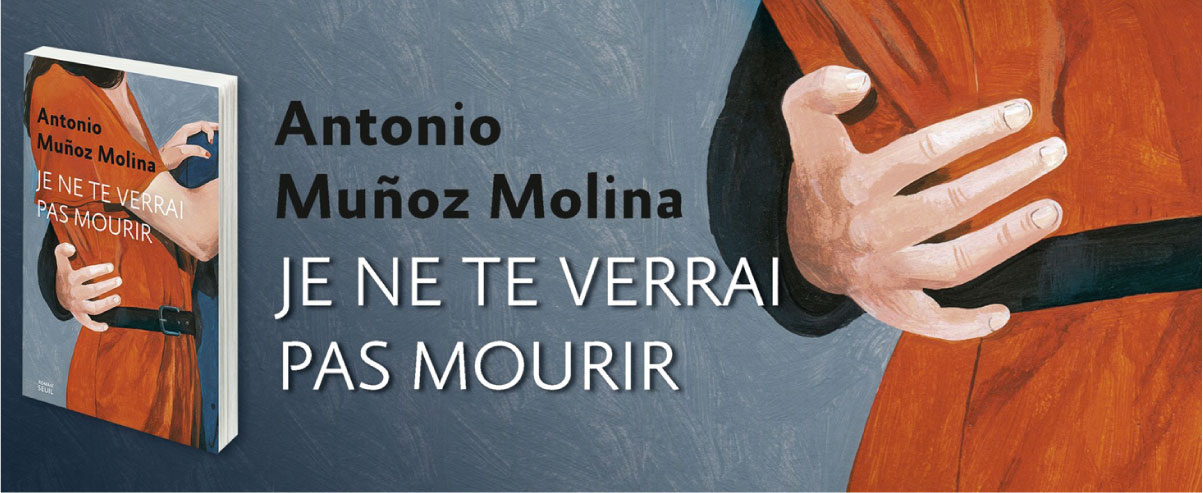
Created in 2018 by the Book1 association and the Amicale du Personnel du Conseil de l’Europe, with the support of the City of Strasbourg and its cultural institutions, this prize is unique in the European literary landscape. It aims to celebrate the diversity of European literary voices and, in particular, literature’s ability to capture love in all its forms.
The prize brings together eleven novels from eleven member countries of the Council of Europe: Austria, France, Germany, Ireland, Italy, Portugal, Spain, Sweden, Switzerland, Ukraine and the United Kingdom.
Each novel is selected according to rigorous criteria:
✓ Original work by a living author
✓ From a member state of the Council of Europe
✓ Celebrating the importance of love in all its forms
✓ Translated into French
✓ Recently published
A prestigious list of achievements
Previous editions have honoured exceptional writers:
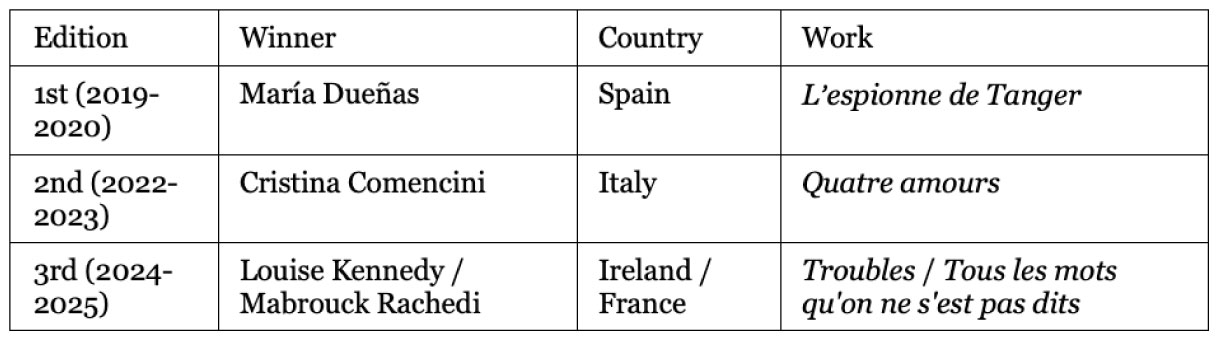
Awards and distinctions
The winner of the 4th edition will receive:
– An official trophy
– A cash prize of €5,000
– An invitation to Strasbourg for the official ceremony (early 2027)
– A public meeting with readers and literary professionals
– International media coverage
The electoral process: a democratic model
Unlike many literary prizes awarded by a jury of experts behind closed doors, the European Romance Novel Prize operates on a three-part voting model:
1. Online public vote (33%)
Any avid reader can vote for their favourite novel from among the eleven nominees. This vote is important and carries equal weight in the final decision.
2. Institutional partners’ vote (33%)
Cultural institutions, embassies, consulates and partners in Strasbourg take part in the vote.
3. Popular jury vote (33%)
A group of independent readers, recruited specifically for this task, read all the novels and vote according to their personal criteria of literary merit and narrative excellence.
This democratic structure ensures that the prize is not determined solely by elite critics, but also by real readers, by ordinary people who love literature.
The 2026–2027 award schedule
Phase 1: Presentation and public vote (January–October 2026)
📅 15 January 2026
Official announcement of the 11 novels selected for the 4th edition. They are:
Germany: ‘The Warrior’ by Helene Bukowski
Austria: ‘Braconnages’ by Reinhard Kaiser-Mühlecker
Spain: ‘Je ne te verrai pas mourir’ by Juan Antonio Muñoz Molina
France: ‘Le rêve du pécheur’ by Hemley Boum
Ireland: ‘L’affaire Rachel’ by Caroline O’Donoghue
Italy: ‘Adoration’ by Alice Urciuolo
Portugal: ‘Secret Gardens of Lisbon’ by Manuela Gonzaga
United Kingdom: ‘Missed Loves’ by Susie Boyt
Sweden: ‘The Devil’s Take’ by Lina Wolff
Switzerland: ‘Days on Fire’ by Pascal Dethurens
Ukraine: ‘Almost Never Otherwise’ by Maria Matios
📅 31 January 2026
Official launch at the Bibliothèque Nationale Universitaire de Strasbourg (BNUS), as part of the “Bibliothèques idéales d’hiver”
This will be a special event featuring:
– Presentation of the 11 nominated novels
– Live musical entertainment
– A meet-and-greet with readers and literary professionals
– A convivial moment to taste wines and cheeses from Alsace
– Distribution of catalogues containing summaries of all the
📅 January–October 2026: public voting period
Readers can vote online for their favourite novel. During this period, various events will be organised to promote the books and allow readers to discover the different works.
📅 Promotional events in 2026
Throughout 2026, numerous events will be organised to promote the 11 novels:
– Literary meetings in libraries and bookshops in Strasbourg and the Eurometropolis
– Dramatic readings of excerpts from the novels
– Round tables with literary critics discussing the books
– Screenings of films based on the authors’ literary works
– Meetings with the authors (some of whom will visit Strasbourg)
– Radio programmes and podcasts dedicated to the prize
– Articles in the print and digital press
The selected novels will be available:
– At the Médiathèque André Malraux in Strasbourg
– In other media libraries in the Eurométropole de Strasbourg
– In independent bookshops and bookshop chains
– On online purchasing platforms
Phase 2: Decision and celebration (November 2026 – February 2027)
📅 November 2026
Grand Jury meeting with the participation of:
– Representatives of the voting public (results of the online vote)
– Representatives of institutional partners
– Members of the popular jury
All votes will be analysed and the winner will be selected.
📅 February/March 2027
Official award ceremony in Strasbourg.
Programme:
– Presentation of the award and its history.
– Announcement of the winner.
– Speech by the winner.
– Official reception attended by local and diplomatic authorities.
– Public meeting with readers.
– Book signing session.
The winner will spend several days in Strasbourg, where he or she will attend events and meet the readers who voted for his or her novel.
How do I enter the competition?
If you are an avid reader
Vote online for your favourite novel
From 31 January 2026, you will be able to access the award voting platform and vote for the novel that has made the biggest impression on you from among the 11 nominees.
Your vote counts. It carries the same weight as the votes of critics, institutions and the popular jury.
Go to : www.amicale-coe.eu/prix-europeen-du-roman-damour
If you would like to be part of the public jury
The prize is looking for independent readers who would like to be part of the public jury. If you read the 11 books (or most of them) and would like to take part in the grand jury vote, you can register by contacting the Médiathèque André Malraux.
This is a unique opportunity to participate in the decision-making process, express your opinion as a reader and make your voice heard in the literary world.
If you are an educator
If you work in a school, library or educational institution, the prize offers teaching resources to help you explore these novels with your pupils.
You can organise reading clubs, literary debates or creative writing activities inspired by the novels.
The novel everyone should read in 2026
When Gabriel Aristu closes his eyes at the age of seventy, in the twilight of his life in New York, he continues to hear Adriana Zuber’s voice echoing in his dreams. Fifty years have passed since he left Madrid, since they said goodbye one evening in May 1967, with the implicit promise to see each other again soon. But that “soon” never came.
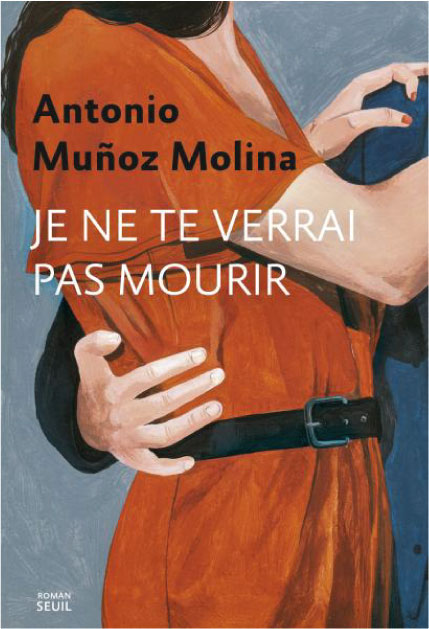
« Je ne te verrai pas mourir » (‘I Will Not See You Die’) is the latest masterpiece by Juan Antonio Muñoz Molina winner of the Prince of Asturias Award for Literature (2013), a Spanish writer who has spent decades erecting monuments of prose on the ruins of time, memory and regret. Published in French by Éditions du Seuil in August 2025, in a masterful translation by Isabelle Gugnon, this novel is an emotional symphony that both celebrates and laments the irrevocable power of love.

She is undoubtedly the ideal candidate for the Prix européen du roman d’amour, now in its fourth edition (2026–2027), an award that celebrates each year the ability of European literature to capture the essence of love in all its forms.
Why should you read this novel?
1. It is a masterpiece of contemporary prose.
Juan Antonio Muñoz Molina is one of Spain’s greatest living writers. He has won virtually every major literary prize in Spain. « Je ne te verrai pas mourir » (‘I Will Not See You Die’) is his most personal, mature and profound novel. It is the work of a writer who has reached the peak of his career.
2. It is a universally human story.
Although set in post-war Spain, this novel speaks to anyone who has ever loved. It speaks of the sacrifices we make for ambition. It speaks of the passing of time and how it changes us. It speaks of nostalgia, of regrets, of the choices we did not make.
These are themes that resonate in the heart of every human being, regardless of nationality or era.
3. It is a fascinating narrative experience.
The structure of the novel – with a first part consisting of a single continuous paragraph, followed by shifting perspectives – is innovative and daring. Muñoz Molina does not take the easy route. He challenges the reader, but rewards them in return.
4. It is the best of European literature
This novel celebrates the best of the European literary tradition: psychological depth, musicality of language, commitment to emotional truth, respect for the reader’s intelligence.
5. It is a reflection on history and its consequences
The Spanish Civil War and Francoism are not simply a historical backdrop. They are woven into the plot of the novel, showing how major historical events shape individual lives and how political decisions have profound emotional consequences.
Ready to discover one of the great novels of our time?
‘Nostalgia for a first love is often nostalgia for the person we once were.’
— Juan Antonio Muñoz Molina
No Comments